Your creatures are only the start. Here is what you do with them.
Scan
Point your phone at any barcode. The digits become a creature, the same one for everyone, forever.
Dress your Keeper
Some barcodes hold something to wear instead. Your Keeper wears it, and what your Keeper wears makes your creatures stronger.
Train
Spar with the Instructor on the beach. Every fight earns your Keeper experience: levels open new slots to wear things in, and after the last slot, make everything you wear work harder.
Grow a village
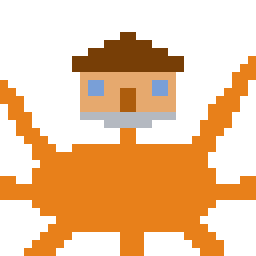
Put your creatures to work at the mine, the lake and the forge, and raise buildings that each open something new. The archaeologist lives there, reading the bosses' secrets off old stones.
The weekly boss
Once a week a boss comes. Send your best five; it pays gold, experience and Sunstone shards, and the village runs on shards.
The monthly boss
Once a month something far bigger arrives, and every player fights it at once, for five hours. It cannot be killed, only driven off. Materials from your village help uncover what it is.
The tower
Climb it floor by floor. Every ten floors it asks for different creatures, so it tests your whole collection, not just your best five.
Compete
Hold a title until somebody takes it from you, climb the leaderboards, and unlock every achievement you can.
How it works
Point your phone at a barcode. Anything — a pasta packet, a tin, a
bottle of shampoo, something on a shelf in a shop you are walking through.
The digits become a creature. Its body, its colours, its pattern, its
stats and its name all come out of the number. Nothing is rolled twice.
It is yours, and it is the same for everyone. That packet gives the same
creature to you, to your friend, and to a stranger in another country — today
and in ten years.
Found so far
—
distinct creatures discovered by players, out of roughly a trillion barcodes in the
world.
Your creatures will change. We are still drawing bodies, heads
and limbs. When new art lands, some creatures are re-rolled and yours may end
up looking different. We will say so, in the app, before it happens.
Balance will move. Stats, rarity and battle numbers are being
tuned. Nothing is final until battles have actually been played.
Nothing you find is lost. Your scans are saved and backed up.
First discoveries stay yours permanently, even if the creature's picture
changes.
It is free, and it stays free to play. No ads, and no timers you
can pay to skip. Everything in the game is found by scanning or bought with gold you
earned playing, and there is no way to pay your way past anybody: the only things
for sale are packs of looks and music, which never win a fight, and never gold.
What is coming
Now
Playable today
Scanning and collecting — the core loop, live
Offline scanning — eggs that hatch when you reconnect
Four creature families — biped, quad, round and winged
Sparring — a team of five, fought with nothing to lose
Leaderboards — opt-in, by your name or anonymously, with your place either way
Titles — held by whoever currently leads, and taken the day somebody passes them
Achievements — over three hundred badges: every body, skin, marking and eye the game can make, the village and the weekly bosses
Something to earn by fighting — so a win is worth having
Offline sparring — the Instructor travels with you
Something else in small barcodes — items, worn by your Keeper, found the same way as everything else
The tower — something to climb between events
Somewhere to spend what you find — stocked by players, not by us
A weekly boss — once a week, one of eight, for you alone
Sound and music — every effect made from numbers, and eight tracks for the menus
A village — somewhere your creatures stay, and get on with things while you are elsewhere
Expeditions — teams sent out from the village, coming back with what they found
An app on Google Play — on the store, the same game and the same hero
A monthly boss — one for everybody at once
Boards and badges for the monthly boss — who took most of it, and who gave most to the monolith
Attacks that move — every element's shot forms, turns and flies with a trail
Cosmetics — death markers, hit styles and music: free looks for everyone, and packs to buy
Your Keeper, dressed — wearing what you equip, with the face and hair you choose
Notifications on your phone — the reminders you choose, even with the game closed
Friends — a QR beside you or a link far away, then visit their collection and their Keeper, spar their team and trade creatures
Next
Being built
An all-time board for the monthly boss — once it has come a few times
Later
Designed, not started
Serpentine creatures — a fifth family
Drawn by hand
Every body, head, leg and tail is drawn on a fixed grid at a fixed palette, one
pixel at a time. No AI-generated art, anywhere. Creatures are
assembled from those parts, so one new head changes thousands of them at once.
Over a billion different-looking creatures are possible today, and the number grows
every time something new is drawn. You can play at two levels of detail, too — the small ones
above are the same creatures at the chunkier setting.
What we store
A name you choose, the barcodes you scan, and what you do in the game. The
privacy page has the whole list.
We do not store your email or your real name, and the private notes you write on a
creature never leave your phone. Nothing is sold or shared, and there are no
trackers or ads.
What a barcode actually is
A number, printed as stripes so a machine can read it. Almost every product in the
world carries one, and it is unique to that product — which is the whole reason
this game can promise you the same creature every time.
There are a few kinds. Scanlings reads the three you will actually meet, and you
can try all of them right here.
Reading this on your phone? These are for scanning off another screen —
open the page on a computer, or just go and find a real packet.
EAN-13 — thirteen digits, and what most of the world uses: Europe, Asia,
Australia, South America. If you are holding a supermarket product outside
North America, it is almost certainly one of these.
UPC-A — twelve digits, the North American one. The same idea, one digit
shorter. We read it as the EAN-13 it really is, so a product sold on both sides
of the Atlantic gives the same creature either way.
EAN-8 — the short one, for packets too small for the full thirteen
digits. Chewing gum, a little tin, a sachet.
It does not hold a creature. It holds something to wear — found the same way,
by scanning a real packet, and never bought.